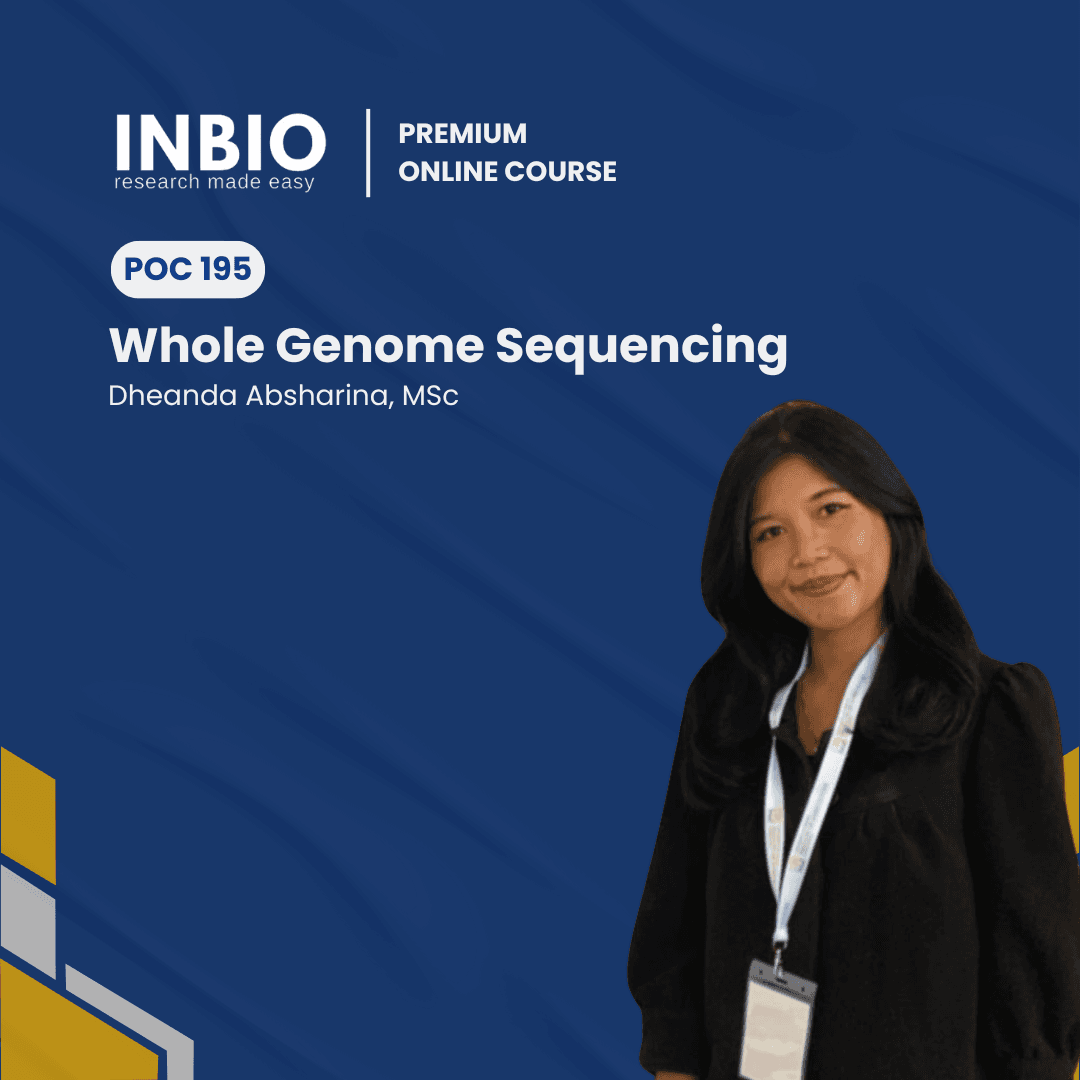
Whole Genome Sequencing
Dheanda Absharina, M.Sc.



Course Overview
This course introduces participants to Whole Genome Sequencing (WGS), a comprehensive method for analyzing the complete DNA sequence of an organism’s genome. It begins with an overview of WGS, including key sequencing technologies and standard file formats such as FASTQ, BAM, and VCF. Learners will gain an understanding of the typical WGS analysis pipeline—from raw data to annotated variants—and explore commonly used tools for quality control, read mapping, variant calling, and annotation. The hands-on session will guide participants through core steps of the WGS workflow: performing quality control checks, read trimming, mapping reads to a reference genome, identifying genetic variants, and annotating those variants for biological interpretation. Designed for students, researchers, and professionals entering the field of genomic data analysis, this course requires no prior experience with sequencing but assumes basic knowledge of molecular biology. This course introduces participants to Whole Genome Sequencing (WGS), a comprehensive method for analyzing the complete DNA sequence of an organism’s genome. It begins with an overview of WGS, including key sequencing technologies and standard file formats such as FASTQ, BAM, and VCF. Learners will gain an understanding of the typical WGS analysis pipeline—from raw data to annotated variants—and explore commonly used tools for quality control, read mapping, variant calling, and annotation. The hands-on session will guide participants through core steps of the WGS workflow: performing quality control checks, read trimming, mapping reads to a reference genome, identifying genetic variants, and annotating those variants for biological interpretation. Designed for students, researchers, and professionals entering the field of genomic data analysis, this course requires no prior experience with sequencing but assumes basic knowledge of molecular biology.
Sub-topics
- 1.What is Whole Genome Sequencing (WGS)?
- 2.Sequencing Technologies & File Formats
- 3.Overview of WGS Analysis Pipeline
- 4.Common Tools Used in WGS
- 5.Hands on: Quality Control, Trimming, Read Mapping, Variant Calling, Variant Annotation
Course Components
-